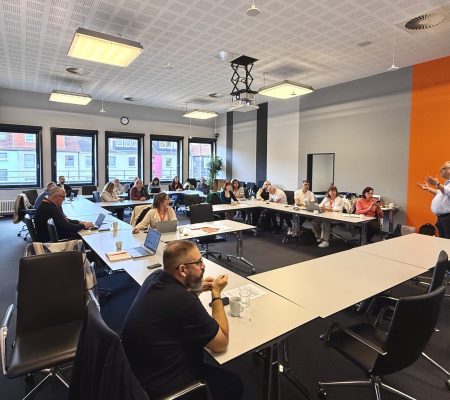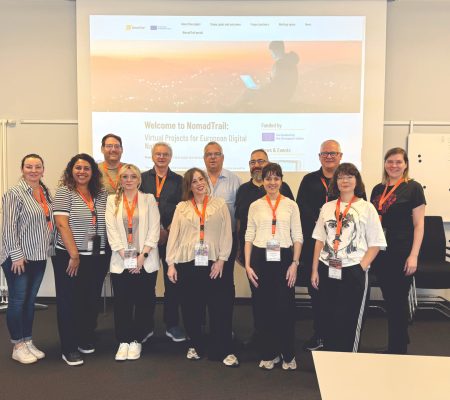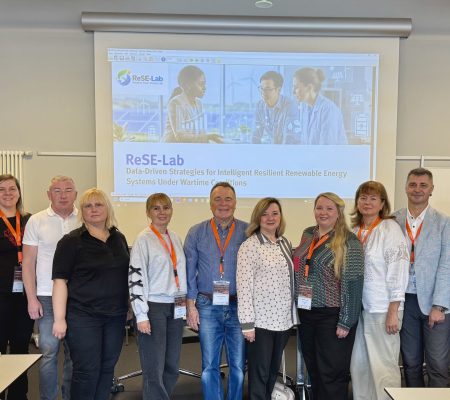
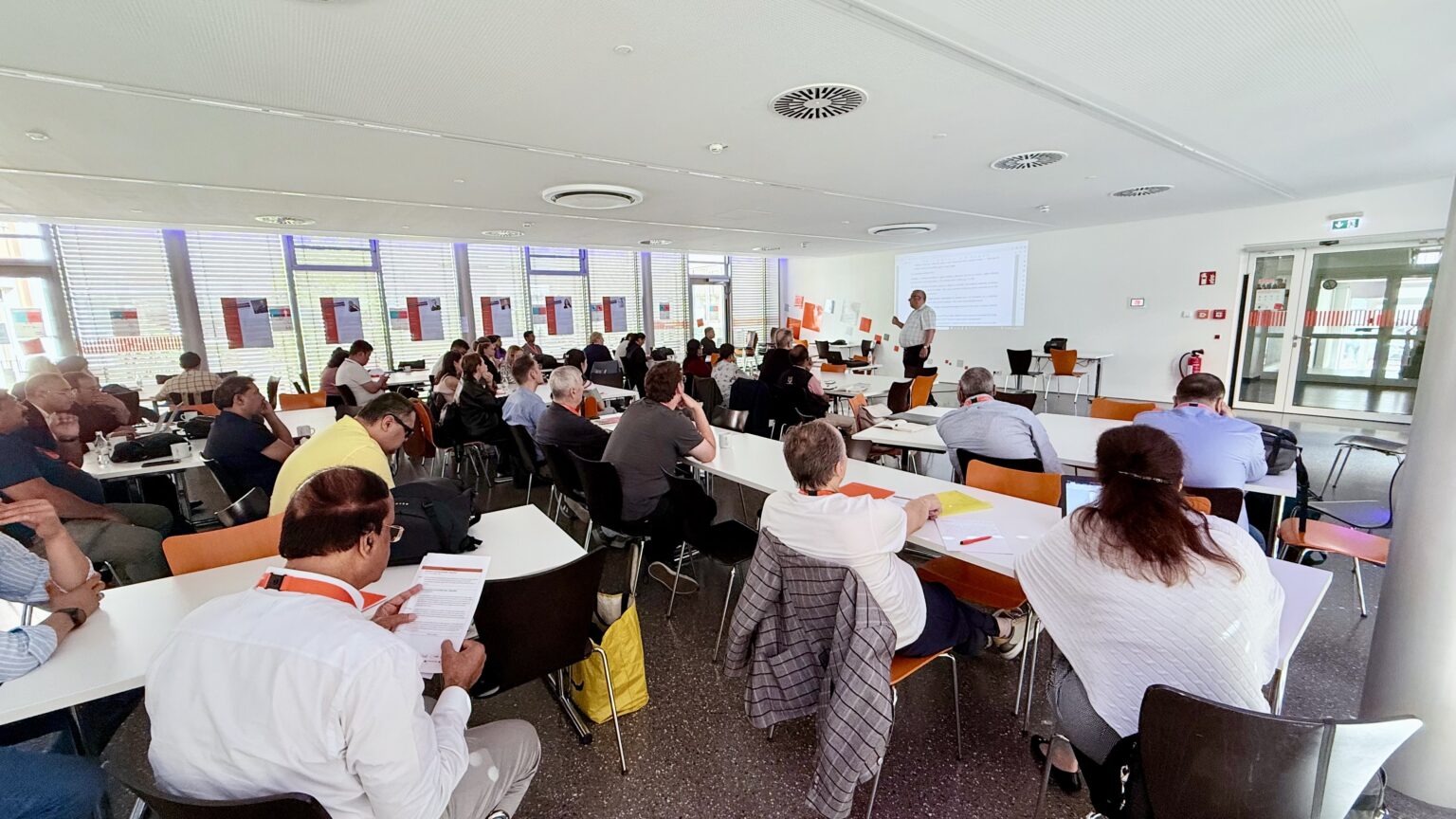
On the field of International Summer Convention (ISC) 2025, Prof. Dr. Carsten Wolff delivered a Train-the-Trainer workshop on how to run Virtual Cross-Border Projects. The workshop was developed in frames of the Erasmus+Nomadtrail project (2023-1-DE01-KA220-HED-000153927) brought together university representatives, practitioners, and other participants interested in strengthening international cooperation in higher education.
International projects have become one of the most effective instruments for fostering sustainable partnerships between universities. Many of the collaborations represented at ISC originated from joint initiatives funded by programmes such as Erasmus+ and DAAD. Over the years, these partnerships have generated a wealth of experience, methods, and best practices for developing, implementing, and managing successful international projects.
The workshop focused on systematising this knowledge and sharing practical approaches for cross-border collaboration. Participants exchanged experiences and discussed effective project management strategies, digital collaboration tools, and methods for building long-term international partnerships. A particular emphasis was placed on compiling guidelines and resources that can support future international projects.
Two key objectives were pursued during the workshop: the development of a practical methods handbook for international cooperation projects and the initiation of ideas for future joint funding applications that will further strengthen existing partnerships and networks.
Another important focus of the workshop was project-based learning in an international context. Participants explored methods for conducting collaborative projects involving students from different countries, both in physical mobility formats such as summer schools and in virtual environments. These approaches build on concepts similar to Collaborative Online International Learning (COIL) and have been successfully applied within the international networks of Dortmund University of Applied Sciences and Arts for many years.
The workshop highlighted the growing importance of virtual and blended collaboration formats in higher education and demonstrated how international project work can enhance both student learning and institutional cooperation across borders.
More information about the Erasmus+ NomadTrail project is available on the project website.