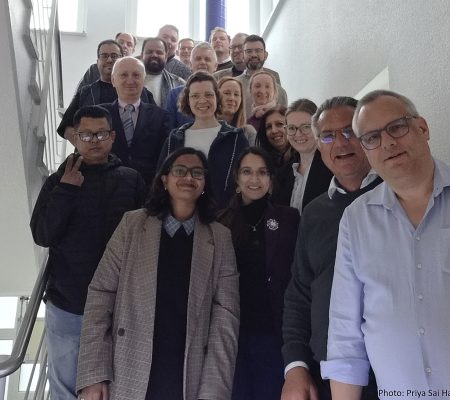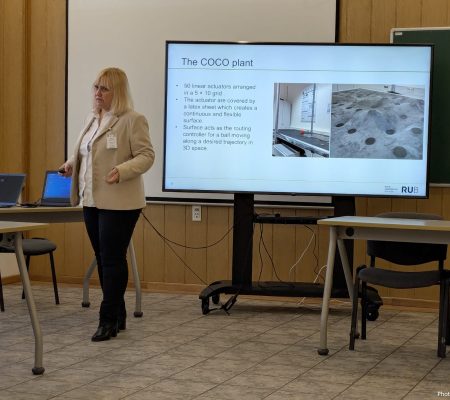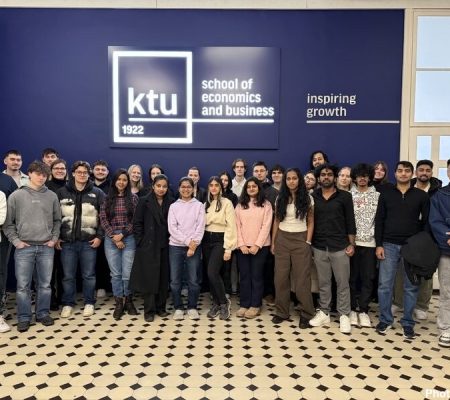
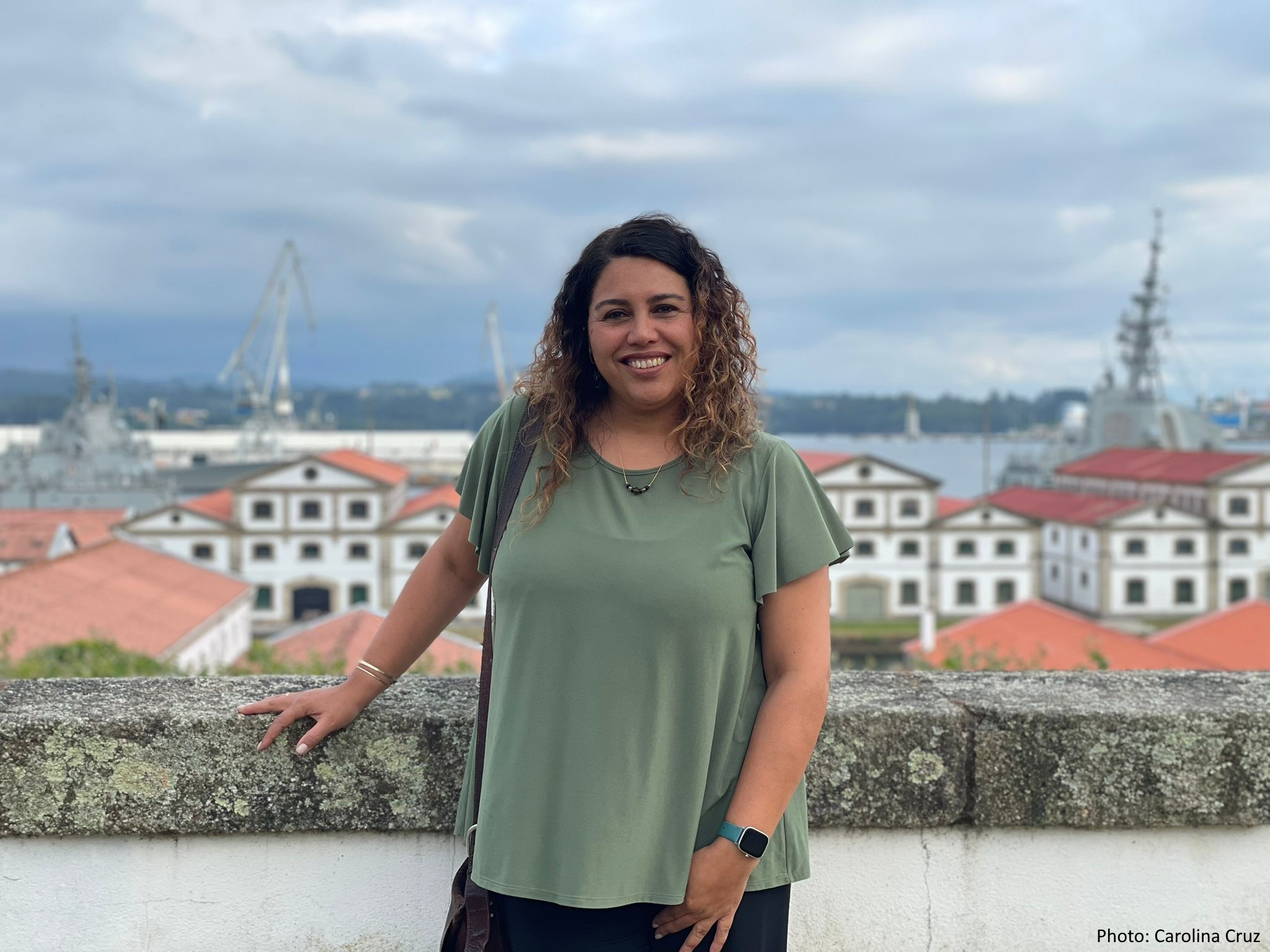
We would like to continue introducing you members of the EupoPIM Consortium. Dr. Carolina Cruz-Villazon is an Industrial Engineer with a PhD in Engineering Project Management from the University of the Basque Country (UPV/EHU).
-Congratulations on your new position as Professor! How does it feel to reach this milestone in your academic career?
–It feels really rewarding. I started this new position in September, and after several years focused mainly on research, becoming a lecturer is a big step for me. Of course, it comes with more responsibilities and a heavier workload, but it is also very fulfilling. I really enjoy teaching at both bachelor’s and master’s level and especially seeing how students grow and gain confidence over time. Being able to combine teaching with research makes the role even more meaningful for me.
-What does this promotion mean to you personally and professionally?
–Personally, this promotion feels like recognition of the path I’ve been on so far, but not as an endpoint. The journey continues, and there are still many experiences, challenges and roles ahead. I see it as part of an ongoing process rather than a final achievement. Professionally, it comes with more responsibility and also more opportunities to contribute. It allows me to keep developing my teaching, strengthening collaboration with others, and supporting students in a more meaningful way. For me, it’s a step forward in a longer journey, not the end of it.
–Could you tell us a bit about your academic journey — what inspired you to pursue a career in higher education and research?
–My academic journey has been quite gradual. I started out very much focused on research, and for several years that was really the core of my work. What inspired me to stay in academia was the possibility of going deeper into topics I care about, asking questions, and working on projects with impact beyond just one institution. Over time, I realised that higher education also offers the chance to combine research with teaching. Even before becoming a teacher, I enjoyed working with students in different ways, and I became interested in sharing knowledge, guiding learning processes, and connecting theory with practice. That combination of research, collaboration and teaching is what motivated me to continue building my career in academia.
-Once you mentioned Motivation, couple you tell us a bit more about what motivates you most in your work as a teacher and researcher?
–What motivates me most is feeling that I’m part of a broader process of change and education. As a teacher, I see my role not only in helping students develop technical skills, but also in encouraging them to reflect, question assumptions and think more critically about the world around them. This is something I see especially in my sustainability-related classes, where the right questions can really lead students to pause and rethink certain ideas. Being able to raise awareness and contribute, even in small ways, to a shift in perspective is very rewarding. In my research, that motivation continues through working on topics connected to broader challenges and collaboration with colleagues from different countries and backgrounds. Exchanging perspectives in an international setting strengthens the link between research and teaching. Overall, it’s very enriching to feel that this work connects beyond a single institution and contributes to meaningful learning and reflection.
-When you look back, what achievement are you most proud of so far?
-When I look back, what I value most is the journey itself. For me, it’s about the people I’ve worked with, the experiences I’ve lived, and the challenges I’ve faced along the way. Objectives change over time, but what really stays with you are the shared experiences and the relationships built through working together. Seeing how those experiences have shaped the way I think, teach and work today is something I feel proud of. It’s that combination of learning, collaboration and personal growth that stands out the most for me.
-Could you share your main research interests and how they have evolved over the years?
-I started out with a strong focus on project management from a more technical and methodological perspective. Over time, though, my interests have broadened. I have become interested in how projects can create long-term value, not just in terms of performance, but also in their wider social and environmental impact. This shift happened quite naturally, especially through my involvement in international projects within our consortium. Working closely with partners from different universities meant I was often exploring new topics that were slightly outside my original comfort zone. Through this, I became particularly interested in areas such as sustainable digital transformation and how digital initiatives can be designed with sustainability in mind from the start. Today, my research sits at the intersection of project management, innovation, and sustainability. What I really enjoy is how these areas feed into each other, both in my research and in my teaching. Some of the ideas that started as research questions have now become part of the courses I teach, which makes the whole process very coherent and rewarding.
-What are you currently focusing on in your research or teaching activities?
-At the moment, my work is split between teaching and research, and I really enjoy that balance. On the teaching side, I am involved in courses related to sustainable, agile and lean project management. I try to design my classes, so they are as practical as possible, using Project-Based Learning (PBL). That means students work on real projects and learn by doing, not just by listening or reading theory. In terms of research, I am focusing on how organisations manage projects in environments that are constantly changing, especially when digitalisation and sustainability come into play. What I like is how closely my research and teaching are linked. Topics I work on in my research are included in my classes, and conversations with students regularly open new questions and directions for my research.
-You have been closely involved in collaboration projects with FH Dortmund. How has this partnership influenced your work or professional growth?
–Working with FH Dortmund has had a strong influence on my professional development. Over the years, we have built a very solid consortium together with other partner universities such as KU Leuven in Belgium, NTNU in Norway and KTU in Lithuania. What I value most is how well integrated and collaborative this partnership is. It is not just a formal cooperation on paper, but a group that genuinely works together, shares ideas openly and trusts each other. Through this consortium, we have been able to develop and deliver meaningful projects, especially within the Erasmus+ framework. Being part of these joint initiatives has pushed me to think more internationally, to learn from different academic cultures, and to continuously improve both my research and teaching practice. Overall, this partnership has helped me grow professionally and has given my work a much broader perspective.
-How do you see the future of collaboration between your institution and the Concortium developing?
-I see the collaboration developing in a very concrete and practical way. Within the consortium, we already work closely through pilot teaching activities, where lecturers travel to partner universities to teach, and students come together for intensive learning weeks, such as summer or winter schools. These experiences create a very dynamic learning environment and really strengthen the connection between institutions. Another important aspect is the train-the-trainers approach, where academic staff receive training in current and emerging topics from colleagues with specific expertise. This allows us to continuously update our knowledge and bring new perspectives into our teaching. Alongside this, I see strong potential for expanding joint research activities, with new projects that build on our shared experience and allow us to develop research together across institutions. Overall, the collaboration feels very mature, and I see it becoming even more integrated in the future, linking teaching, research and staff development more closely.
-How do you bring innovation or new methods into your classes or supervision of students?
-My teaching is very practice-oriented, and I use PBL and challenge-based learning to involve students in real and complex situations rather than purely academic tasks. This approach helps them develop key professional skills such as collaboration, critical thinking, and working within real constraints. Agile and lean project management principles play an important role in my courses, encouraging an iterative way of working and continuous adaptation as projects evolve. Sustainability is embedded throughout the process, shaping how projects are designed and managed. I also draw on case studies from real projects developed within Erasmus+ consortium initiatives. One example is the Digital Sustainability Canvas, a tool developed through these projects to help visualise sustainability impacts in digital transformation projects, which students apply directly to their own work. In my agile classes, I also introduce tools such as Confluence and Jira, so students gain hands-on experience with platforms commonly used in organisations. Communication skills are another focus, especially pitching, so students learn how to clearly present and defend their ideas.
-Talking about the future perspectives, what goals or projects are you looking forward to in your new role as professor?
-In this new role, I’m really looking forward to further developing my teaching and the courses I’m involved in, especially around project management and sustainability. I’d like to keep refining the way I combine different methods and tools, so students are well prepared for real professional contexts. On the research side, I’m keen to continue working on international projects, particularly within the Erasmus+ framework and the consortium we’ve built over the years. Strengthening those collaborations and turning joint work into both research outcomes and teaching innovations is something I find very motivating. Overall, my goal is to keep building a profile that brings research, teaching and international cooperation together.
-What advice would you give to young academics who are just starting their careers in higher education or research?
-I would say, first, be patient and don’t feel pressured to have everything figured out from the start. An academic career takes time, and it often develops in unexpected ways. It’s worth taking the time to reflect on what really motivates you and what kind of work gives you a sense of purpose, because that makes a big difference in the long run. I’d also encourage young academics to stay open to innovation and collaboration. Working with others, especially in international and interdisciplinary settings, helps you learn faster and improve your work through different perspectives. And finally, try to keep a good balance between research, teaching and personal wellbeing. Taking care of yourself makes it much easier to stay motivated and engaged over time.
-Thank you for such an full and open interview! On behalf of the Editorial Office, I would like to wish you success in your future achievements and looking forward to working with you for other projects!