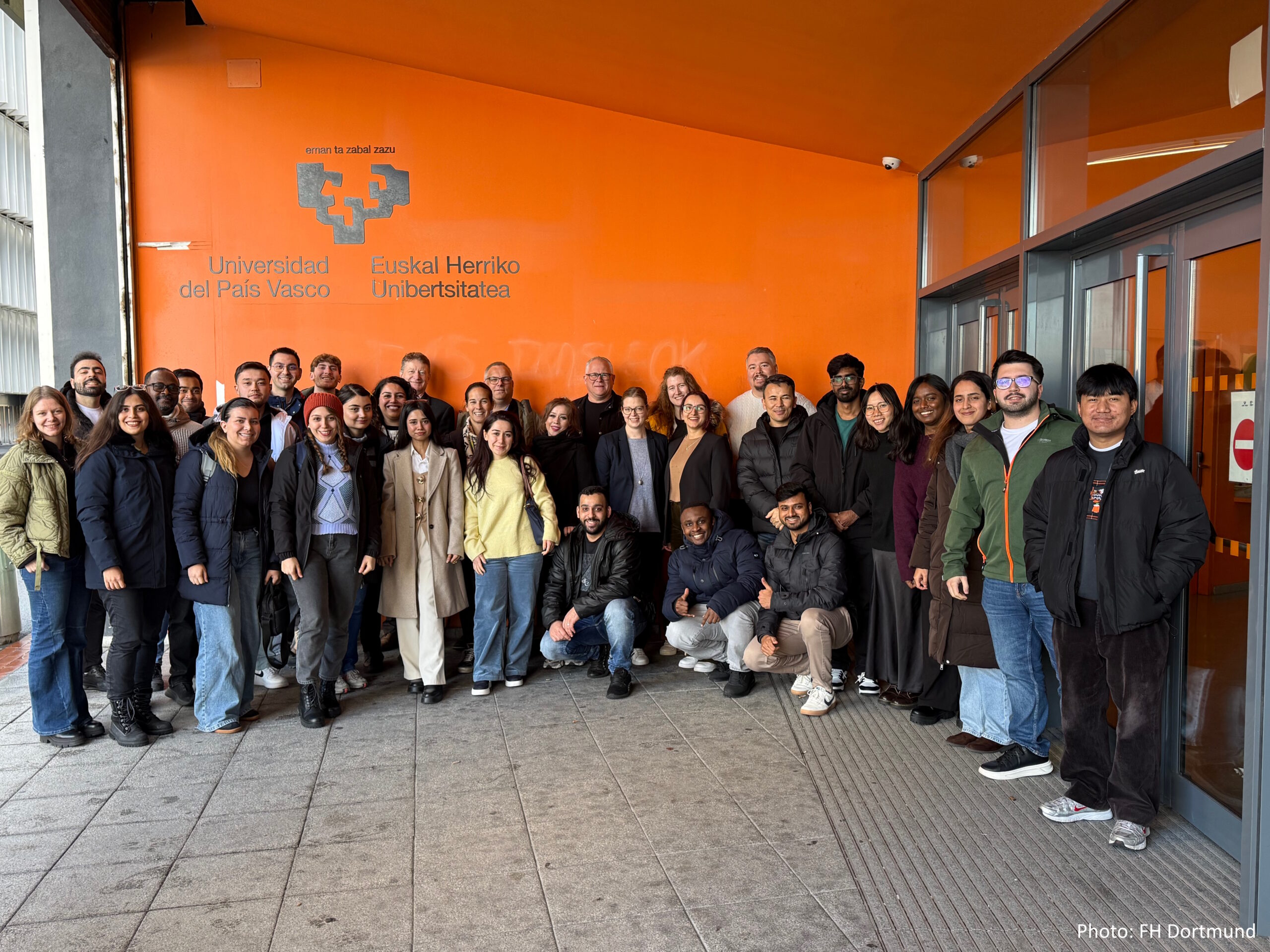
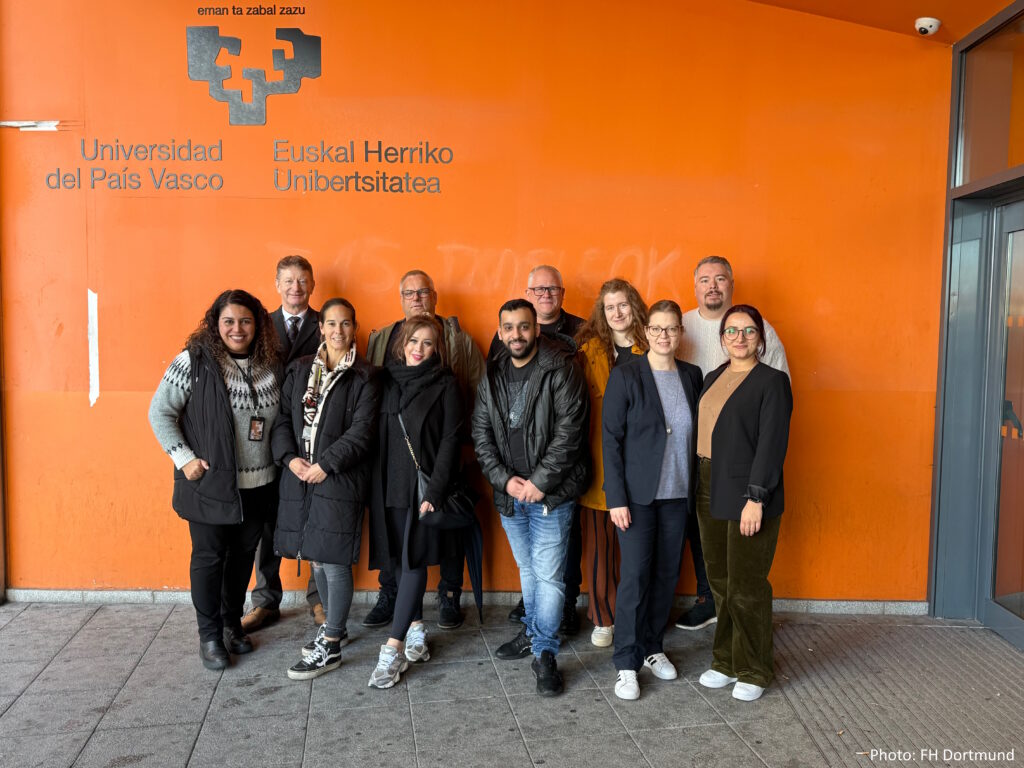
From 21st to 29th November 2025, the Faculty of Engineering of the University of the Basque Country (UPV/EHU) hosted the Blended Intensive Programme (BIP) “Sustainability & Quality” in cooperation with Dortmund University of Applied Sciences and Arts (FH Dortmund) and KU Leuven. The programme was offered as part of Erasmus+ BIP Mobility and awarded 6 ECTS.
The University of the Basque Country (UPV/EHU) is a strategic partner of FH Dortmund and an active member of the EuroPIM Network. Within this network, UPV/EHU maintains a strong and long-standing cooperation with the international Master’s programmes at FH Dortmund, including a Double Degree Programme in Project Management, in which students successfully complete their studies every year. Beyond teaching activities, the partnership also includes joint research projects, PhD programmes, and further academic collaborations, underlining the depth and sustainability of the cooperation between the institutions.
FH Dortmund, KU Leuven and the University of the Basque Country (UPV/EHU) are members of the Euclides network of universities which collaborate in offering different BIPs (Blended Intensive Programs).
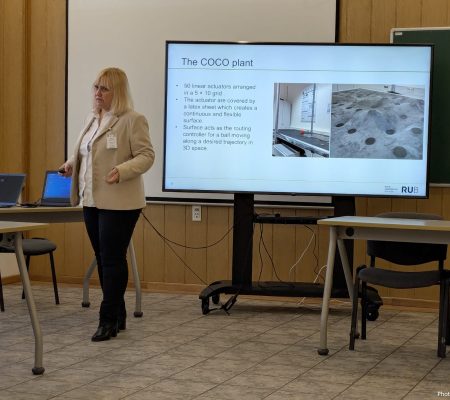
The intensive block week in November 2025 focused on sustainability and quality in engineering and management. Through interactive lectures, case studies, and group work, students explored sustainable business practices, product life cycle management, energy transition, and quality models for organisations.
A total of 25 students from FH Dortmund participated on site in Bilbao. UPV/EHU hosted the programme, while FH Dortmund coordinated the outgoing students and the application process. Lecturers from UPV/EHU, KU Leuven, and FH Dortmund contributed to a diverse academic programme, including topics such as the EFQM Quality Model, energy transition, sustainability in civil engineering, sustainability concepts and canvas tools, sustainable project management, and product life cycle management.
Dr. ing. Peter Arras (KU Leuven) did a lecture and workshop titled (Hidden) Energy we use and our role in the energy transition. “Ensure access to affordable, reliable, sustainable and modern energy for all”, the 7th sustainability goal of UN is a hot topic. Each of us personally uses a lot of energy for heating, transport, food, electricity. A good understanding of what we do and extrapolation to all people in a city/region/country provides us with an insight in the concerns about it. In the lecture we explored and explained some basics to understand the world of energy and to have insight to critically think about what we see on it in the media. To show their understanding, the student teams in the workshop made an infographic on the thematics of energy to motivate kids and families to think about their energetic footprint and giving tips on how to reduce it in small and easy steps.
Alongside the discussion on energy and sustainability challenges, the programme also focused on how sustainability can be integrated into project work in a practical way. In a lecture and workshop titled Sustainability Concepts & Digital Sustainability Canvas, Dr. Carolina Cruz-Villazón (UPV/EHU) introduced the Digital Sustainable Canvas (DSC) as a simple visual tool to map environmental, social and economic aspects in project planning. Students worked on a real project case to identify and map direct, indirect and unintended impacts, helping to raise awareness of sustainability issues and support informed decision-making. The DSC was developed within the Erasmus+ project NomadTrail (2023-1-DE01-KA220-HED-000153927), and this pilot teaching in November contributed to testing and further applying the tool in an international learning setting. Working in small teams, the students compared options using shared criteria, set priorities and next steps, and gained practical experience in applying sustainability concepts to real project work.
Working in international teams, students gained valuable intercultural experience and practical insights into sustainable engineering solutions. The BIP demonstrated the strength of cooperation in higher education and provided participants with key competencies for addressing future sustainability challenges.